Friday, June 8, 2012

Corpus Christi

... Was actually yesterday, so I am a day late on this post. However, I meant to do a post, and was excited about the post I meant to do, so you are getting it today instead. I present to you, The Corpus Christi Carol. Hayley Westenra sings this on her Christmas album, and that is where first I heard it. Obviously, it is not really a Christmas carol, even though the word carol is almost exclusively associated with Christmas these days.


Lulley, lully, lulley, lully,

The faucon hath born my mak away.

He bare hym up, he bare hym down,
He bare hym into an orchard brown.

In that orchard ther was an hall,
That was hanged with purpill and pall.

And in that hall ther was a bede,
Hit was hangid with gold so rede.

And yn that bede ther lythe a knyght,
His wowndes bledyng day and nyght.

By that bedes side ther kneleth a may,
And she wepeth both nyght and day.

And by that bedes side ther stondith a ston,
"Corpus Christi" wretyn theron.

The medieval imagery is intensely allegorical. Most obviously are the symbols of the Wounded Knight, Who is a figure of Christ Crucified, and the weeping may (maiden) who is a figure of His most holy Mother. The barren, brown orchard is open to numerous interpretations: the desolation of the world after the fall of Adam; the emptiness of a soul in sin; death itself, perhaps. The colours too suggest meanings. Purple is the liturgical colour for Lent, and days of penance. Red is used for feasts of martyrs and symbolises blood. Gold is used for high feasts, such as Easter. The word mak here, is an old word for mate, or more specifically, love. The phrase itself is ambiguous, and lends itself to numerous interpretations, but it reminiscent of Mary Magdalene's cry, "They have taken away my Lord; and I do not know where they have laid Him".

The figure of Christ as a knight, or a warrior was very common in medieval allegory. So does he appear in the Old English poem, The Dream of the Rood. In The Vision of Piers Plowman, He appears as a knight, jousting for men's souls. There is a very old poem by William Herbert, Quis est iste qui uenit de Edom contains the line 'what is he, this lordling, that cometh in from the fight?' The imagery is particularly vivid - the Young Hero who dies love - and ties in very beautifully with the Sleeping King/Sleeping Hero myths that abound in mythology.


Wednesday, June 6, 2012

D-Day


Today is the anniversary of the largest amphibious assault in history - to whit, the D-Day invasions of Normandy during WWII. Here are some facts about the assault you might not have know:

 - Although months of rigorous planning proceeded the invasion, the actual date of June 6th was selected at the last minute.Logistically, the action needed to take place at the beginning of June, the 5th being the preferred date. However, there were a number of variables that had to be taken into account during the planning. The bombers required a full moon, and a (cloud) ceiling of at least 5000 feet. The sea could not be too rough, otherwise the heavy transport boats would not be able to make the crossing. If the winds exceeded 20 mph, the paratroopers would be unable to land safely. June came in with one of the worst summer storms in twenty years. The decision to attack on June 6th was due to the weather report given by James Martin Scagg, predicting a 24 hour period or relatively decent weather in the midst of the storm.  You can read about it here and here.

 - The Scottish Highlands were used for a lot of training during WWII, including practice for the Normandy invasion. The British Commandos took intensive training courses there.

 - The actor, Richard Todd took part in the invasion. Nearly twenty years later, he appeared in the movie, The Longest Day in the role of Major John Howard, who was his commanding officer. Another actor, in a bit role, plays Richard Todd himself.

 - Tiny submarines, manned by Commandos, were sent to Normandy in advance of the invasion to conduct reconnaissance, and to lead the landing craft safely to the beach. They hid within range of the German guns for five days before the assault took place.

 - Bagpipes were used in the attack. Piper Bill Millin, under orders from his commanding officer, Simon Fraser, Lord Lovat, piped his men off the boats and up to the beach, while enduring heavy fire from the Germans. You can read his account of the attack here.


Billy Millin

Friday, June 1, 2012

Cristiada


Today the movie Cristiada is being released in the United States under the title, For the Greater Glory. I have been looking forward to this movie ever since I saw the trailer last year. Check it out, it looks pretty good:


Monday, May 28, 2012

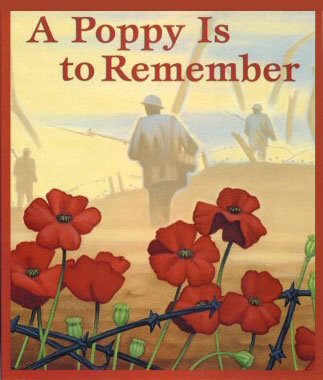
Memorial Day

In Flander's Field

In Flanders fields the poppies blow
Between the crosses, row on row,
That mark our place; and in the sky
The larks, still bravely singing, fly
Scarce heard amid the guns below.

We are the Dead. Short days ago
We lived, felt dawn, saw sunset glow,
Loved and were loved, and now we lie
In Flanders fields.

Take up our quarrel with the foe:
To you from failing hands we throw
The torch; be yours to hold it high.
If ye break faith with us who die
We shall not sleep, though poppies grow
In Flanders fields.

                              by John McCrae


The Battle's O'er is a Scottish song that seem particularly appropriate for today. It a very common piping tune, but I came across this rather fine sung version of it, so I am posting it here:

Monday, April 16, 2012

April 16th....


This is the anniversary of the battle of Culloden - the final battle between the armies of Bonnie Prince Charlie and the soldiers of King George. It ended in a tragic defeat for the Jacobites, a defeat from which they would never recover, and as for the Scottish clans who fought for their Prince... Well, in retaliation, the British occupied the Highlands for many years after, banning the wearing of the tartan, the speaking of Gaelic, the playing of the pipes, the carrying of a weapon - even one so insignificant as a sgian dubh. The clan-system was destroyed, and many Scots fled the country for a new life in France or America.

My sisters and I were in Scotland last year about this time, and took a trip up to Culloden. It is a fascinating place - a great wide plain, with the British and Scottish lines marked with flags. The Scots should never have engaged the British there - it was guerrilla fighting they excelled at, and it which gave them the edge they needed to go against the bigger and technologically advanced might of King George's army. Culloden offered them no chance for that, particularly as they were tired and dispirited from a long, hard winter campaign. For all that, the Scots, out-numbered and out-gunned as they were, managed to break through the British lines, and put up a tremendous fight.

It was an odd feeling to stand behind the low, ancient stone wall beside the flags of the Scottish line, and look out across the Moor to where the British would have been. There is a distinctive atmosphere to Culloden. We were there on a bright, warm spring day, so it cannot be put down to Scotland's notoriously rainy weather. It is a wild, empty place and so quiet that the wind seems loud. There are large stones along the path that runs from one end of the battle field to the other, and they are inscribed with the names of all the clans who fought there, and at the far end a single stone cottage which survived the battle - Old Leanach Cottage, which is very small, but has such thick walls that it took a shot of cannon-fire, and had nothing to show for it but a scar on the side

Saturday, March 17, 2012

Happy St. Patrick's Day!

Here I am, back by popular demand! Well, no, not really, although Amanda did send an email asking when I planned to start blogging again. However, since St. Patrick's Day is one of my favourite holidays, it seemed a good time to come out of hibernation. So here are some facts about St. Patrick's Day you might not have known.

- St. Patrick was born in Kilpatrick, Scotland. However, he was not Scottish, but rather a Roman.

- The first St. Patrick's Day Parade was held in America. Some folk say that it was in 1737 in Boston, and that the Charitable Irish Society put it on. Others say that it was held in New York City in 1762, and that it was Irish soldiers serving in the British army who were responsible.

- On March 16, 1793, George Washington’s General Order to his troops granted St. Patrick’s Day to be a holiday.

- St. Patrick's Day is a national holiday on the island of Montserrat in the Caribbean, due to the high number of Irish refugees who settled there.

- In Great Britain, shamrocks are traditionally distributed to the Irish Guards by the Queen. This year, however, they were presented by Katherine, Duchess of Cambridge.

- St. Patrick's uncle was St. Martin of Tours, the Roman soldier who gave part of his cloak to our Lord, who was disguised as a beggar.

I always go all-out in the celebration of St. Patrick's Day. I usually wear this:

It is a very beautifully pleated kilted skirt, in a colour I refer to as 'saffron, and my sisters call orange. This particular outfit is based off the Irish Guards pipers' uniforms. This year, I also decided to wear shamrocks in my hair. To my great dismay, I could not find any convincing artificial shamrocks, nor even clover, to wear, and so fell back on making my own. It was surprisingly easy, and they turned out surprisingly real-looking.

All you need is some stiff green paper for the leaves, ordinary white copier paper for the blossoms, and some wire for the stems:

It doesn't show up very well in the pictures, but I have drawn shamrock shapes on the green paper. I cut them out, and gently shape them:

Then I punch a small whole in the center with a push pin, place a large dollop of Elmer's glue over the whole, and thread the wire through, curling the end slightly so it does not pull out:

For the blossoms, curl the paper around itself to form a very small cone:

Flatten the cones, and then fold them in to thirds:

Cut them into petal shapes:

Carefully unfold the paper:

Put a large dollop of glue in the center of the flowers, tread the stems through, and shape the petals a bit to make them look natural:

And here is the finished result:


Of course, the day is also celebrated with corn beef and cabbage, Irish coffees, and listening to Irish folk music - the Clancy Brothers usually, since they are my favourites. However, the Wolfe Tones are quite good too. Here they are singing Hail Glorious St. Patrick:


Friday, January 6, 2012

Happy Epiphany


Epiphany is the last day of Christmas, and commemorates the visitation of the Three Kings to the child Jesus. The feast day is also known as Little Christmas, or Nollaig Bheag, in Ireland. My family has always referred to it as Little Christmas, and traditionally, we celebrate it much as we do Christmas day, though on a smaller scale. We always choose one present to set aside for Epiphany before we start opening everything Christmas morning, and it is a source of pride to make this package be one of the most intriguing present we can find. Those gifts remain under the tree for the full twelve days, and when they little girls get up on Epiphany morning, they discover that the Three Kings have stopped by on their way to Bethlehem and left a small gift for each of them under the tree as well. We usually have an Italian meal, very similar to the gnocchi and ham we had for Christmas dinner, and generally make merry. It is a wonderful tradition, and an excellent way of keeping the spirit of Christmas in the home, when the world is well finished with it. Below is a clip featuring the song, We Three Kings. I liked both the arrangement, and the graphics: